Manufactured Home Water Damage in Plant City, FL
Manufactured homes around Plant City hide their plumbing under the floor inside a belly wrap. A leak there soaks insulation and particleboard before anyone sees it. The restoration team opens it up and dries the structure.
(888) 621-2041Soft floor or wet belly wrap? Call now.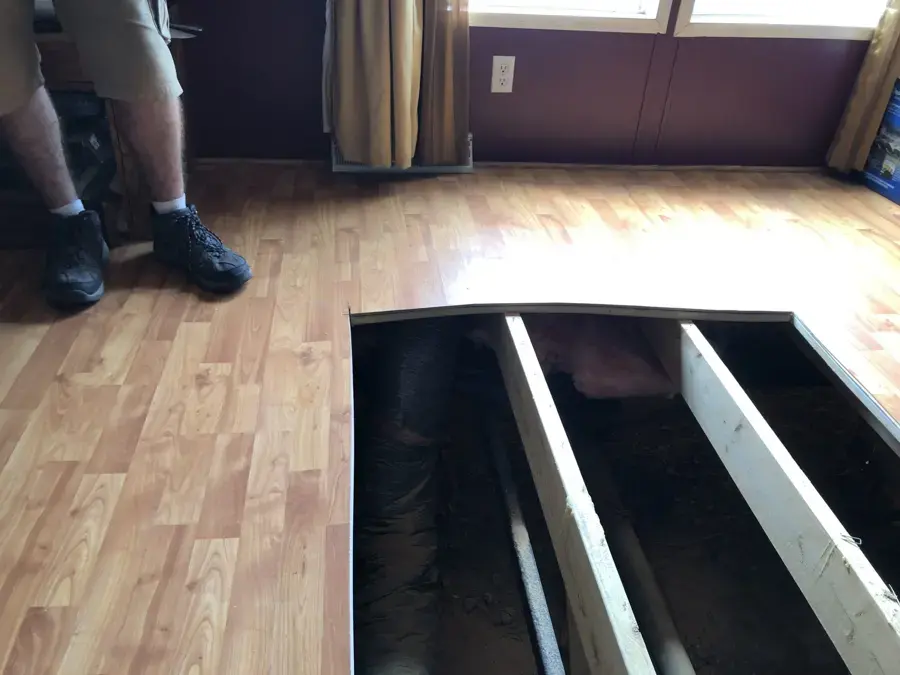
First steps for manufactured home water damage in Plant City
Shut the main
At the meter or the well pump.
Look underneath
A sagging or dripping belly wrap means water is trapped.
Stay off soft spots
Swollen particleboard can give way.
Photograph
Inside, underneath and the roof edges.
How the Plant City team handles manufactured home water damage
Moisture mapped first
The tech who does the walkthrough maps wet materials with pinless meters and thermal imaging before any equipment goes down.
IICRC S500 drying standard
The drying team works to IICRC S500, the industry drying standard: structural drying, not just surface drying.
Claim-ready documentation
Daily moisture readings, drying logs and timestamped photos build the file an adjuster reviews.
Plant City water experts
Slab leaks, AC condensate overflows, summer storm roof leaks and septic backups are everyday work here.
What does manufactured home water damage cost in Plant City, FL?
In Plant City, FL, manufactured home water damage restoration typically runs $1,500 to $8,000. The drivers are how much insulation and belly wrap got wet, how much particleboard must be replaced, and the water category.
One area
$1,500 to $2,800
- Belly drained
- Insulation removed
- Joists dried
Kitchen or bath floor
$2,800 to $5,500
- Particleboard removal
- Belly repair after drying
- Dehumidifiers
Wide or flood damage
$5,500 to $8,000+
- Large subfloor removal
- Category 3 treatment
- Claim documentation
Want a closer planning number? Run the Plant City water damage cost calculator. A firm figure comes from the on-site walkthrough, never from a web form.
The manufactured home water damage process, row by row
- 1
Map it
The walkthrough tech finds where the water went, room by room, with meters and thermal imaging.
- 2
Pull it
The extraction crew removes standing water first, usually with truck-mounted units.
- 3
Dry it
Air movers and LGR dehumidifiers run at the load each room needs, with daily readings.
- 4
Prove it
Equipment comes out when readings sit within 2 to 4 points of a dry reference.
Plant City and the farm areas around it have a large share of manufactured homes, both in parks and on rural lots toward Trapnell, Keysville and Knights. They are built differently from a block home on slab, and water damage in them behaves differently too.
How a manufactured home holds water
The supply and drain lines run under the floor, inside the insulation and a plastic or fabric belly wrap. When a line leaks, water collects in the belly, soaks the insulation and sits against the underside of the floor. Many older homes use particleboard decking, which swells and loses strength when it gets wet and does not recover.
- A sagging or dripping belly wrap means water is trapped underneath.
- Soft or swollen floor spots near the kitchen, bath or water heater are common.
- Roof seams and edges leak in wind-driven rain.
How the restoration runs
The tech who does the walkthrough maps moisture from inside and checks the belly from underneath. The mitigation team opens the belly wrap to drain trapped water and remove soaked insulation, and cuts out particleboard that swelled or lost strength. The drying team then dries the joists and remaining decking with air movers and LGR dehumidifiers, working from above and below, until readings reach the goal. The belly is patched once everything is dry.
When the water came from rain through the roof, see roof leak water damage. For flood water around the home, see storm and flash flood cleanup.
Manufactured homes and insurance
Manufactured home policies vary more than standard homeowners policies, and flood coverage is separate. Photos of the floor, the belly and the source help. Coverage depends on your policy, so it is worth checking with your own insurer.
Manufactured housing information from HUD and flood insurance basics from FloodSmart.
Manufactured home water damage across Plant City and east Hillsborough
The Plant City restoration crew covers downtown, the North Plant City historic district, Walden Lake, Knights, Cork, Trapnell, Keysville and Springhead, plus Dover, Seffner and Thonotosassa, ZIP codes 33563, 33564, 33565, 33566 and 33567.
Every neighborhood and ZIP coveredRelated water damage services in Plant City
Manufactured Home Water Damage questions in Plant City, FL
The Plant City restoration crew works day and night on manufactured home water damage.
(888) 621-2041Why is my manufactured home floor soft?
Particleboard decking swells and weakens when wet. A soft spot near a sink, tub, toilet or water heater usually means a leak underneath.
What is the belly wrap?
The plastic or fabric barrier under the floor that holds insulation and protects the plumbing. It can trap leaking water.
Can wet particleboard be dried?
Usually not. Once it swells it loses strength, so it is cut out and replaced after the joists dry.
Do the drying crews work under the home?
Yes. The belly is opened to drain water and remove wet insulation, and drying runs from above and below.
Is flood water around the home handled differently?
Yes. Outside flood water is Category 3, so insulation, decking and other porous materials it touched are removed.
Does insurance cover manufactured home water damage?
Policies vary. Coverage depends on your policy, so it is worth checking with your own insurer.
Water under a Plant City manufactured home? Open it up.
Water in the belly keeps soaking insulation and particleboard until someone drains it. The mitigation team works day and night across Plant City, Trapnell, Keysville and Knights.