Structural Drying & Dehumidification in Plant City, FL
Dry to the touch is not dry. The drying team runs air movers and dehumidifiers sized to each room and records readings every day until block walls, slab and framing match a dry reference.
(888) 621-2041Walls still wet? Call now.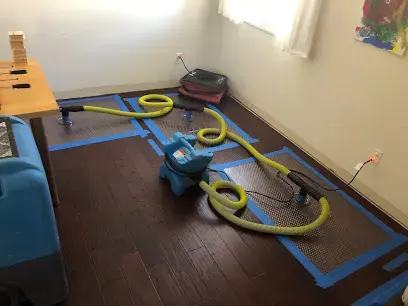
First steps for structural drying in Plant City
Leave equipment running
Switching it off at night slows the dry.
Keep doors and windows closed
Humid outside air works against dehumidifiers.
Keep the AC on
Unless the drying team says otherwise.
Do not paint or patch
Until readings reach the goal.
How the Plant City team handles structural drying
Moisture mapped first
The tech who does the walkthrough maps wet materials with pinless meters and thermal imaging before any equipment goes down.
IICRC S500 drying standard
The drying team works to IICRC S500, the industry drying standard: structural drying, not just surface drying.
Claim-ready documentation
Daily moisture readings, drying logs and timestamped photos build the file an adjuster reviews.
Plant City water experts
Slab leaks, AC condensate overflows, summer storm roof leaks and septic backups are everyday work here.
What does structural drying cost in Plant City, FL?
In Plant City, FL, structural drying typically runs $1,200 to $7,000. The drivers are the class of loss, how many rooms need equipment, how many days the drying takes, and whether desiccant units are needed for block or hardwood.
One or two rooms
$1,200 to $2,500
- Air movers
- One LGR dehumidifier
- Three to four days of logs
Several rooms
$2,500 to $4,800
- Wall cavity drying
- Multiple dehumidifiers
- Daily psychrometric logs
Class 4 materials
$4,800 to $7,000+
- Desiccant dehumidifiers
- Hardwood floor mats
- Block and slab drying
Want a closer planning number? Run the Plant City water damage cost calculator. A firm figure comes from the on-site walkthrough, never from a web form.
The structural drying process, row by row
- 1
Map it
The walkthrough tech finds where the water went, room by room, with meters and thermal imaging.
- 2
Pull it
The extraction crew removes standing water first, usually with truck-mounted units.
- 3
Dry it
Air movers and LGR dehumidifiers run at the load each room needs, with daily readings.
- 4
Prove it
Equipment comes out when readings sit within 2 to 4 points of a dry reference.
Structural drying is the part of a water job that decides whether the damage is really over. Plant City homes are mostly concrete block on slab, and block and concrete hold water deep inside. Florida air is humid most of the year, so the dehumidifiers carry more of the load here than in a dry climate.
How the drying plan is set
The tech who does the walkthrough maps every wet material with pinless and pin meters and thermal imaging, and takes a reading on the same material in a dry part of the house. That dry reference is the target. IICRC S500 sorts the loss into Class 1 through 4, which sets how much equipment a room needs.
- Class 1: part of a room, little water absorbed.
- Class 2: a whole room, water wicking up the walls.
- Class 3: ceilings, walls and floors all wet.
- Class 4: bound water in dense materials such as block, slab, plaster and hardwood.
The equipment and why it matters
Air movers blow across wet surfaces to speed evaporation. LGR (low grain refrigerant) dehumidifiers pull that moisture out of the air even when it is humid. Desiccant dehumidifiers handle Class 4 materials and cooler conditions. Floor drying mats pull water up out of hardwood. The drying team adjusts the setup as readings drop.
Daily readings and the drying log
Most crews take readings every day and log them with temperature and relative humidity. That psychrometric record shows the structure getting drier and is what an adjuster reviews. Equipment comes out when the wet materials read within 2 to 4 points of the dry reference, not when the surface looks dry. A contained Class 2 loss usually takes three to five days; block walls and hardwood take longer. Estimate a timeline with the drying time estimator.
Indoor moisture guidance from the EPA and Florida building science from UF/IFAS Extension.
Structural drying across Plant City and east Hillsborough
The Plant City restoration crew covers downtown, the North Plant City historic district, Walden Lake, Knights, Cork, Trapnell, Keysville and Springhead, plus Dover, Seffner and Thonotosassa, ZIP codes 33563, 33564, 33565, 33566 and 33567.
Every neighborhood and ZIP coveredRelated water damage services in Plant City
Structural Drying and Dehumidification questions in Plant City, FL
The Plant City restoration crew works day and night on structural drying.
(888) 621-2041What does dry to the IICRC S500 standard mean?
It means wet materials are dried until they read within 2 to 4 points of the same material in a dry part of the house, confirmed with meters and logged.
Why keep the equipment running if the room feels dry?
Surfaces dry first. Moisture stays inside drywall, block and flooring until the readings say otherwise.
Can I turn the equipment off at night?
It slows the drying. Most drying plans assume the equipment runs around the clock.
Why do block walls take longer?
Concrete block holds water in the block and its cores and gives it up slowly, often needing extra days or desiccant drying.
Should the AC stay on during drying?
Usually yes, because it helps keep humidity down. The drying team adjusts based on the readings.
When can repairs start?
After the readings reach the drying goal. Painting or installing new flooring over wet materials traps moisture.
Need a Plant City home dried to the goal? Call now.
Block walls and slab hold water long after the surface looks dry. The drying team works day and night across Plant City and east Hillsborough County.