Water Extraction & Removal in Plant City, FL
Every loss starts with getting the water out. The extraction crew pulls standing water off tile, carpet and slab with truck-mounted units, so it leaves the house instead of moving into the next room.
(888) 621-2041Water spreading across the tile? Call now.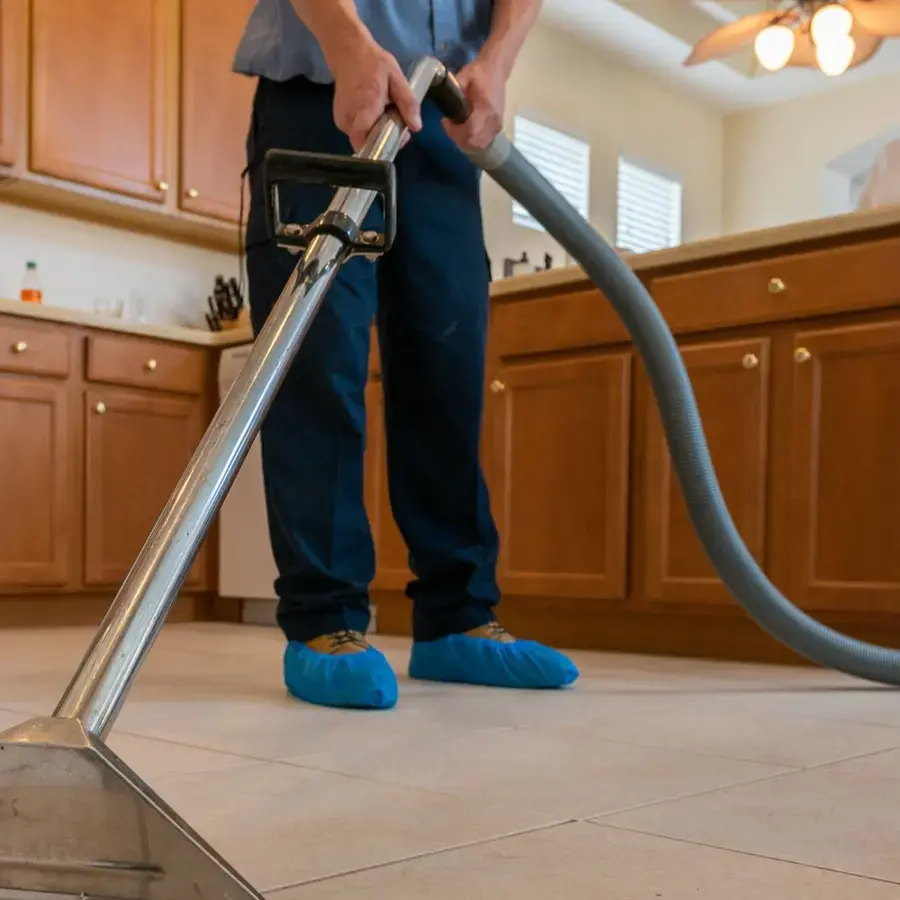
First steps for water extraction in Plant City
Stop the source
Close the main shutoff or the valve feeding the leak.
Cut power to wet rooms
Only at a panel that sits in a dry spot.
Move what you can
Lift rugs, electronics and paper off the wet floor.
Photograph first
Wide shots and close-ups before anything is moved.
How the Plant City team handles water extraction
Moisture mapped first
The tech who does the walkthrough maps wet materials with pinless meters and thermal imaging before any equipment goes down.
IICRC S500 drying standard
The drying team works to IICRC S500, the industry drying standard: structural drying, not just surface drying.
Claim-ready documentation
Daily moisture readings, drying logs and timestamped photos build the file an adjuster reviews.
Plant City water experts
Slab leaks, AC condensate overflows, summer storm roof leaks and septic backups are everyday work here.
What does water extraction cost in Plant City, FL?
In Plant City, FL, water extraction and the drying that follows typically run $900 to $4,500. The drivers are how much standing water there is, the flooring type, the water category and how many rooms need equipment afterward.
One room
$900 to $1,800
- Extraction and pad removal
- Two to three air movers
- Three days of readings
Two to four rooms
$1,800 to $3,500
- Truck-mounted extraction
- LGR dehumidifier
- Baseboard removal if needed
Whole floor
$3,500 to $4,500+
- Multiple extraction passes
- Tile and slab drying
- Daily moisture logs
Want a closer planning number? Run the Plant City water damage cost calculator. A firm figure comes from the on-site walkthrough, never from a web form.
The water extraction process, row by row
- 1
Map it
The walkthrough tech finds where the water went, room by room, with meters and thermal imaging.
- 2
Pull it
The extraction crew removes standing water first, usually with truck-mounted units.
- 3
Dry it
Air movers and LGR dehumidifiers run at the load each room needs, with daily readings.
- 4
Prove it
Equipment comes out when readings sit within 2 to 4 points of a dry reference.
Most Plant City homes sit on a concrete slab with tile or vinyl plank on top, so water spreads fast and far. A failed supply line in a hall bath can reach the kitchen, the living room and the bottom of every block wall it touches. Extraction is the step that limits all of that.
Why extraction comes before anything else
Air movers and dehumidifiers remove moisture by evaporation, and evaporating standing water is slow and expensive. The extraction crew removes the liquid first so the drying equipment only has to deal with what soaked in. A truck-mounted unit parked outside pulls far more water than a shop vacuum and sends it out of the building through the hose.
- Weighted extraction tools press water out of carpet and pad.
- Squeegee wands pull water off tile and sealed concrete.
- Portable extractors reach upstairs rooms and tight closets.
What happens after the water is out
Once the floor is clear, the tech who does the walkthrough checks baseboards, cabinet toe kicks and the lower courses of block walls with pinless meters and thermal imaging. That moisture map decides where air movers and LGR dehumidifiers go and whether any baseboard or drywall has to come off. For carpet, the pad is usually removed on anything but a fresh Category 1 leak, while the carpet itself can often be dried in place.
If the water came from a flood, a sewer or a septic system, it is Category 3 and the plan changes. See sewage and septic backup cleanup for how contaminated water is handled.
Extraction on slab and tile
Water on tile does not stay on top. It finds grout lines and cracks and sits between the tile and the slab, and a slab takes days to give that moisture back. The drying team watches readings at the slab and the base of the walls for several days, not just the surface. Hollow-sounding tile after a leak is a sign water got underneath.
Flood safety basics from Ready.gov and electrical safety advice from OSHA explain why power and standing water do not mix.
Water extraction across Plant City and east Hillsborough
The Plant City restoration crew covers downtown, the North Plant City historic district, Walden Lake, Knights, Cork, Trapnell, Keysville and Springhead, plus Dover, Seffner and Thonotosassa, ZIP codes 33563, 33564, 33565, 33566 and 33567.
Every neighborhood and ZIP coveredRelated water damage services in Plant City
Water Extraction and Removal questions in Plant City, FL
The Plant City restoration crew works day and night on water extraction.
(888) 621-2041How soon should water be extracted?
As soon as possible. Every hour lets more water soak into pad, drywall and block, which turns a drying job into a removal job. In Florida humidity mold can start inside 24 to 48 hours.
Can I just use a wet vacuum?
A shop vacuum helps with a small spill on tile, but it cannot pull water out of carpet pad or from under tile. Truck-mounted units move much more water and leave the floor drier before drying starts.
Will my carpet be saved?
Often the carpet can be dried in place after clean water, while the pad under it is replaced. Carpet touched by Category 3 water, such as sewage or flood water, is removed.
Does extraction work on tile over a slab?
The extraction crew clears the surface, then the drying team tracks moisture under the tile and in the slab. Some tile may need to be lifted if readings stay high.
How is the water category decided?
By the source. A supply line is Category 1, an AC condensate or washer leak is Category 2, and sewage, septic or outside flood water is Category 3.
Is extraction covered by insurance?
Extraction after a sudden and accidental leak is usually part of a homeowners claim. Coverage depends on your policy, so it is worth checking with your own insurer.
Standing water in a Plant City home? Pull it out now.
Water on tile and slab keeps spreading and wicking into block walls until someone removes it. The extraction crew works day and night across Plant City and east Hillsborough County.