Roof Leak Water Damage in Plant City, FL
Summer storms push rain sideways under shingles and around flashing. The restoration team traces the water through the attic, pulls wet insulation and ceiling board, and dries the framing before repairs.
(888) 621-2041Rain coming through the ceiling? Call now.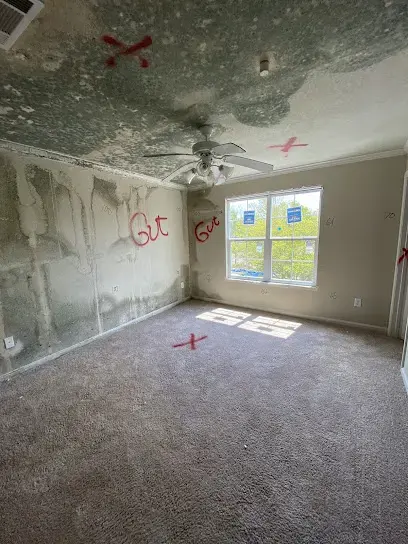
First steps for roof leak water damage in Plant City
Catch the drip
Buckets and towels under the leak.
Relieve a bulging ceiling
A small hole at the low point lets trapped water drain.
Keep power off
If water is near a light fixture or fan.
Tarp when safe
Only after the storm passes; never climb in wind or lightning.
How the Plant City team handles roof leak water damage
Moisture mapped first
The tech who does the walkthrough maps wet materials with pinless meters and thermal imaging before any equipment goes down.
IICRC S500 drying standard
The drying team works to IICRC S500, the industry drying standard: structural drying, not just surface drying.
Claim-ready documentation
Daily moisture readings, drying logs and timestamped photos build the file an adjuster reviews.
Plant City water experts
Slab leaks, AC condensate overflows, summer storm roof leaks and septic backups are everyday work here.
What does roof leak water damage cost in Plant City, FL?
In Plant City, FL, roof leak water damage restoration typically runs $1,500 to $8,000. The drivers are how many rooms the water reached, whether ceiling board and insulation must come out, and how long the leak ran.
One ceiling spot
$1,500 to $2,800
- Moisture mapping
- Ceiling drying in place
- Attic check
Several rooms
$2,800 to $5,500
- Wet insulation removal
- Ceiling board removal
- Air movers and dehumidifiers
Storm damage
$5,500 to $8,000+
- Multiple ceilings and walls
- Flooring below dried
- Full claim documentation
Want a closer planning number? Run the Plant City water damage cost calculator. A firm figure comes from the on-site walkthrough, never from a web form.
The roof leak water damage process, row by row
- 1
Map it
The walkthrough tech finds where the water went, room by room, with meters and thermal imaging.
- 2
Pull it
The extraction crew removes standing water first, usually with truck-mounted units.
- 3
Dry it
Air movers and LGR dehumidifiers run at the load each room needs, with daily readings.
- 4
Prove it
Equipment comes out when readings sit within 2 to 4 points of a dry reference.
Many Plant City homes carry shingle roofs from the 1990s and 2000s, and summer thunderstorms and tropical systems test every one of them. Wind lifts shingles and drives rain past flashing, roof vents and soffits. The first sign indoors is usually a stain or a drip, but by then the insulation above may already be soaked.
Tracing the water from the roof down
Water rarely drips where it enters. It runs along rafters and the top of the ceiling board before it finds a way down. The tech who does the walkthrough uses thermal imaging and pinless meters on the ceiling and walls, then checks the attic for wet insulation and stained decking. That map shows the full reach of the leak, not just the spot on the ceiling.
- Wet blown insulation compacts and holds water against the ceiling.
- Ceiling board that sags or crumbles comes down.
- Framing and top plates get dried to the goal.
Drying the ceiling and attic
If the ceiling board is firm and the water was clean rain, the drying team can often dry it in place with air movers and dehumidifiers, sometimes with small holes drilled to vent the cavity. Sagging board, soaked insulation or a leak that ran for days means removal. Drying continues until the framing and any remaining board read within range of a dry reference.
A roofer repairs the roof itself. Restoration handles the water that got inside. When the leak is inside the house instead, such as a bathroom or an air handler above the ceiling, see ceiling leak water damage.
Roof leaks and insurance
Many policies treat rain that enters through storm damage differently from a slow leak caused by an old roof. Photos of the ceiling, the attic and any missing shingles help. Coverage depends on your policy, so it is worth checking with your own insurer.
Hurricane preparation from the National Hurricane Center and roof safety advice from Ready.gov cover the storm side.
Roof leak water damage across Plant City and east Hillsborough
The Plant City restoration crew covers downtown, the North Plant City historic district, Walden Lake, Knights, Cork, Trapnell, Keysville and Springhead, plus Dover, Seffner and Thonotosassa, ZIP codes 33563, 33564, 33565, 33566 and 33567.
Every neighborhood and ZIP coveredRelated water damage services in Plant City
Roof Leak Water Damage questions in Plant City, FL
The Plant City restoration crew works day and night on roof leak water damage.
(888) 621-2041Can a wet ceiling be dried instead of replaced?
Often, if the board is firm and the water was clean rain. Sagging, crumbling or stained board, or insulation that stayed wet for days, usually means removal.
Why is the stain far from where the roof leaks?
Water runs along rafters and the top of the ceiling before it drips. Thermal imaging and meters trace it back.
Should I poke a hole in a bulging ceiling?
A small hole at the lowest point with a bucket under it lets trapped water drain and can stop the ceiling from collapsing. Stay clear of light fixtures.
Who fixes the roof?
A roofer repairs the roof. The restoration team handles the water inside: the attic, insulation, ceilings, walls and floors.
Does wet attic insulation have to be replaced?
Blown insulation that got soaked usually compacts and loses its value, so it is removed and replaced once the attic is dry.
Is a roof leak covered by insurance?
Rain through storm damage is often covered, while wear and tear usually is not. Coverage depends on your policy, so it is worth checking with your own insurer.
Roof leaking into a Plant City home? Get it dried.
Wet insulation holds water against the ceiling until the board gives way. The drying team works day and night across Plant City and east Hillsborough County.